When you spot a gorgeous balayage on someone else and think, “But I have grey hair, can I ever try that?”–you’re not alone. The short answer is: yes, balayage can be done on grey hair. But there’s art, strategy, and care involved. Let me walk you through how it works, what to expect, and how to keep your hair healthy, vibrant, and on-trend.
What Is Balayage, Anyway?
“Balayage” comes from the French balayer, meaning “to sweep.” Instead of saturating your entire hair in foil or applying color strand-by-strand with lots of demarcation, a colorist paints lighter tones onto selected parts of your hair–typically mid-length to ends–creating a gradual, natural-looking brightness.
Because the roots are left natural (or lightly blended), grow-out is softer, which tends to be lower-maintenance than full-head color.
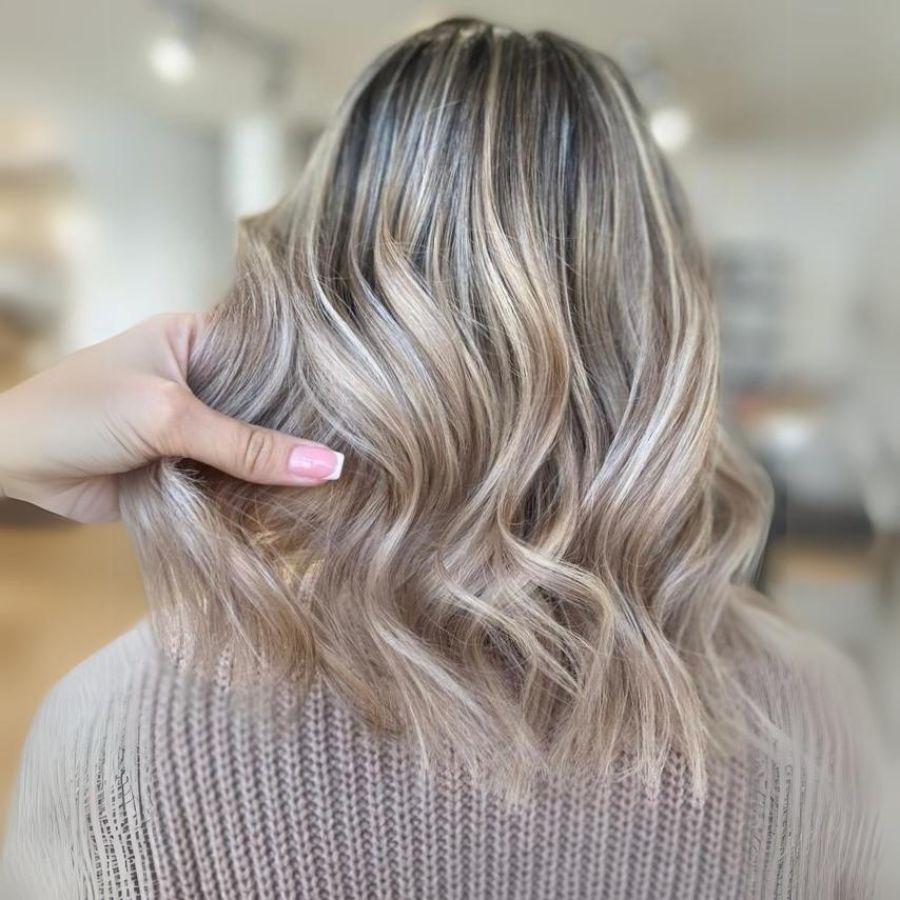
The Grey-Hair Challenge
Grey or white hair is different from pigmented (colored) hair in several ways:
- Porosity and texture: Grey hair often has a different texture. It’s coarser, more wiry, or drier, and can absorb lightening or color differently.
- Underlying pigments: When you bleach or lift grey hair, the “base” you see might be more yellow or brassy, which can affect the final tone.
- Uniformity issues: Grey growth can be patchy (some strands are grey, others not), which makes transitioning tricky.
- Fragility: Because of changes in protein structure, overly aggressive lightening can damage grey hair more quickly.
Because of all that, a stylist needs to proceed with more care, a customized plan, and targeted techniques.

How Balayage on Grey Hair Works
Here’s how a pro stylist might approach balayage on grey or greying hair:
1. Assess your starting point
First, examine how much grey you have, where it’s concentrated (roots, temples, crown), and the condition of your hair. A dry or brittle section might need strengthening before any color service.
2. Decide your goal: blending vs. full coverage
- Blending: Many women don’t want to cover every grey strand–just soften the contrast and add dimension. Balayage works beautifully for blending. Stylists can paint “balayage highlights” into zones with heavy grey to break up solid masses.
- Strand-by-strand lift: If you want those grey strands to visually shift (for example, toward ash or silver tones), the stylist may use lightener selectively, then tone. This is more complex but possible.
3. Use a “root smudge” or root stretch
To soften transitions, a colorist may blur the line between your natural root/grey area and the lighter balayage zones. This makes regrowth less obvious.
4. Choose the right lightener + processing
Rather than blasting full strength, stylists often lift in stages, test small strands, and may rely on lower-volume developers or protective additives (bond builders, glosses) to mitigate damage.
5. Tone / gloss to correct undertones
Once lifted, the hair often needs a toner or gloss to dial back yellowness or to harmonize with your grey tones. This helps the final look feel cohesive.
6. Layer highlights + lowlights
To give depth and prevent a flat silver slab, stylists often mix cool-toned highlights (brightened areas) with lowlights (slightly darker or neutral shades). This interplay keeps the finish dynamic.
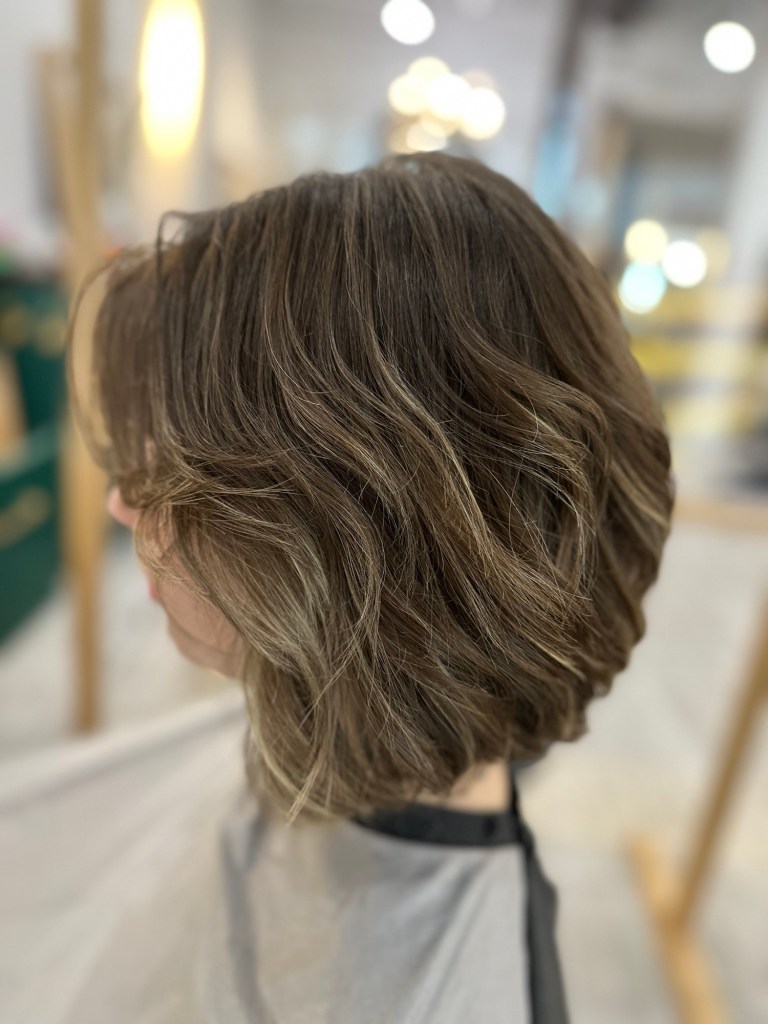
What the Results Look Like
When done well, balayage on grey hair gives you dimension, softness, and a modern glow. You might see:
- Subtle brightness around the face (face-framing “lifts”).
- Soft transitions where grey is woven into lighter or cooler tones.
- A lived-in, blended vibe rather than stark contrast between grey and pigment.
- A higher-fashion, silver/ash-chrome look (depending on your tone goal).
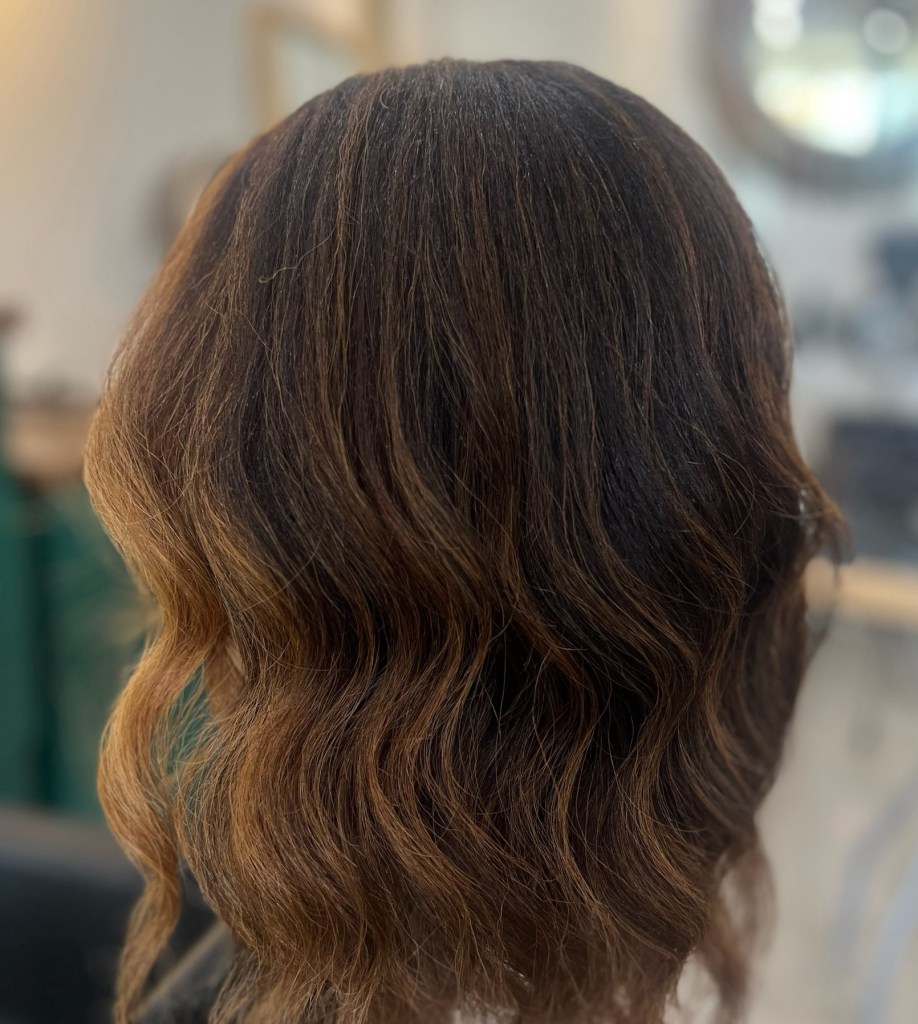
Myths and Misconceptions
- “Balayage will hide all greys.” — Nope. It can blend greys but won’t fully cover heavy regrowth or deeply pigmented grey roots unless augmented with more traditional color work.
- “Grey hair can’t be lightened.” — It can, but more cautiously.
- “It’s low-maintenance for life.” — Relative to full-color retouches, yes but you’ll still have upkeep (toning, conditioning, trimming).
- “You should DIY it.” — Grey-blending balayage is advanced. A stylist versed in grey transitions is a safer bet.

Maintenance: How to Keep It Fresh
After your balayage-on-grey, here’s how to maintain the glow:
- Use a purple / silver shampoo occasionally to keep brassiness under control (especially for lighter tones).
- Deep condition weekly. Grey hair often lacks moisture. Mask treatments help maintain softness.
- Gloss treatment every 6-8 weeks. A clear or toned gloss helps refresh the color and boost shine.
- Trim ends regularly. This ensures older, color-stressed ends don’t degrade the look.
- Minimize heat damage / UV exposure. Use heat protectants. Wear hats or UV sprays outdoors.
- Touch-up smartly. Because balayage regrowth is more forgiving, you might stretch salon visits to every 3-4 months (versus monthly root retouches).
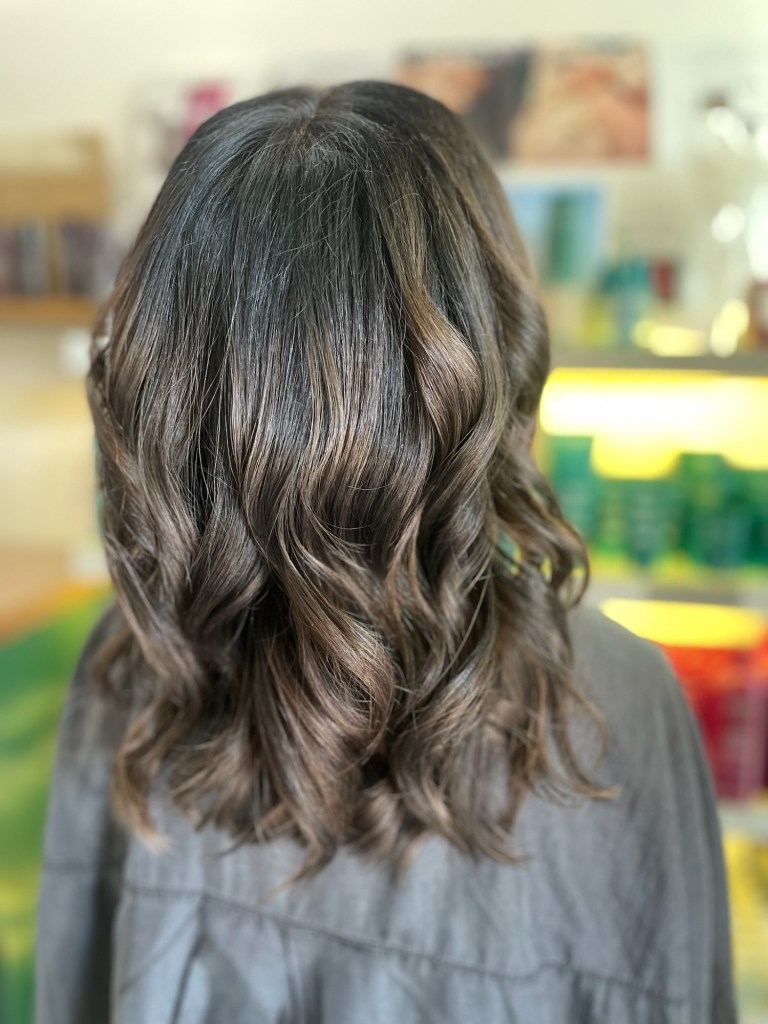
Is It Right for You?
Balayage on grey hair is especially good when:
- You have partial grey and want to break up solid lines of silver.
- You want a softer transition as you grow out dyed color.
- You’re okay with gradual change and prefer dimension over full coverage.
- You’re willing to invest in good hair health (repair, protection).
If your hair is severely damaged or you prefer full, consistent grey coverage from root to tip, a full single-process grey or root touch-up program may be more straightforward. But balayage gives style flexibility many women crave.
Yes, you absolutely can balayage grey hair. But don’t treat it like a “one-size-fits-all” option. The layering, toning, and sensitivity to texture all matter more when greys are involved. With the right stylist and maintenance plan, your grey strands can shine.
 Aveda Theory Hair Salon
Leave a comment